
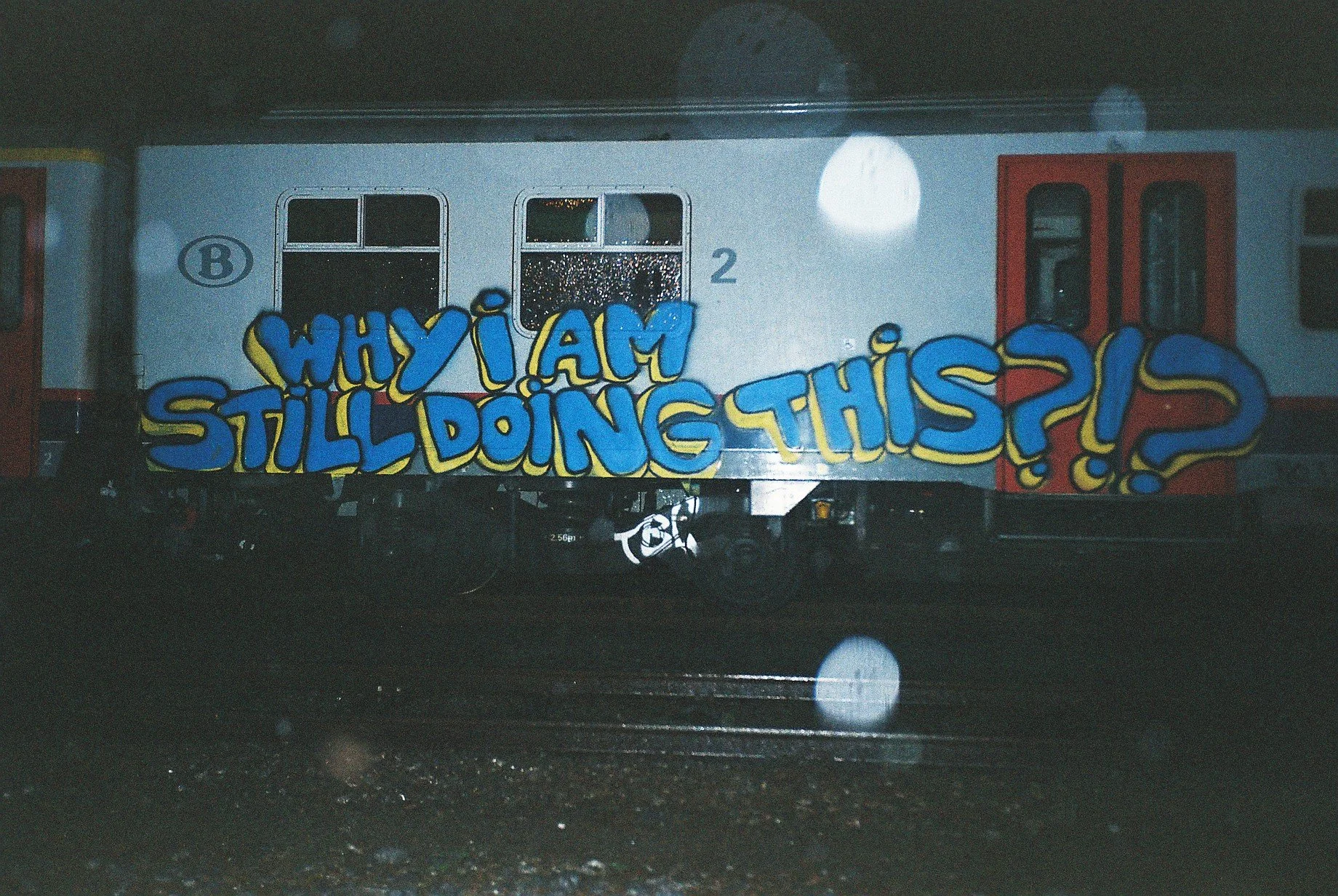
Why I Am Still Doing This?
The Reality of Risk and Consequences in Graffiti Writing
KIND REGRETS | Ep. 3 - Why I Am Still Doing This? - Risk & Consequences of Writing Graffiti
Listen Episode 3 on Spotify | YouTube | Apple Podcasts
Read Time: 8 min.
“Why I Am Still Doing This?” is the central question posed by in the third episode of the Kind Regrets podcast. For those within the graffiti subculture, the "game" is often romanticized through social media clips and repetitive fast-cut videos. But behind the colorful graffiti pieces and the adrenaline of the getting away lies a different, rarely shared reality. A story that might involve a cold holding cells, felony charges, and the crushing weight of legal consequences.
In this personal story, told in detail in the full Episode 3, we shift the focus to the "emotional elevator" of the Greek [but not exclusively] detention system, the legal pitfalls of carrying and using “professional" burglary tools, and the realization of what is at stake when the consequences of our actions.
Welcome back to Kind Regrets.
Underestimating the situation: When Scouting Becomes a Felony
The story begins in Greece, during the quiet of the Christmas and NYE holidays. Most people are home with their families, but for a writer, the holidays represent an opportunity: empty streets and distracted security. After being burn-out of work and projects I decided to open a spot, which I have scouted previously. A simple mission intended only to grant me access to to spot, that seemed as routine until a line of strategic mistakes and underestimation of the situation changed the trajectory of plans I had for the holidays and almost resulted in spending them in custody.
In the eyes of a graffiti writer, lockpicks are not a common tool, but those who want to work clean, leave no trace, damage and to be able to access a premium spot - good alternative to the destructive noise of a crowbar or a bolt cutter. However, in the eyes of the law, lockpicks, or other “professional” tools transform a misdemeanor graffiti charge into a felony burglary attempt.
The Law of Possession
The line of the legal distinction is razor-sharp. If you have camera you can say you are urban explorer. If you are caught with a spray can, you are a vandal. If you are caught with lockpicks or specialized tools, you are a professional [thief]. This narrative shift is the first step in what we calls the "emotional elevator” or the moment I realize that if caught I will no longer be viewed as an artist, or it will require an extra steps to prove it to authorities that will label me differently.
The arrest happened quickly. Surrounded by the DIAS (Greek quick-response police on bikes), I was in a situation that all odds were pointing in the direction that I will be held in custody for burglary. And so It happened. I was arrested, at least until the police contact the owner and if he want to press charges.
The emotional elevator inside the police station.
"They don't know who you are”,"To them, you are just another “customer” in the system. They aren't there to be your friends, even if they act nice.”
One of the critical lessons is the danger of "the phone." In the modern age, a writer’s phone is a digital confession. If it contains photos, locations, chats, and evidence of years of activity.
"Do not unlock your phone. It doesn't matter if they threaten you. It doesn't matter if they tell you it will make it easier. Your phone is the key to your own prison cell.”
The police used every psychological tactic in the book, including the "good cop" routine, trying to convince you to show them your car or to unlock your device. By refusing, I maintained a shred of legal leverage, though it resulted in his vehicle being towed and searched - a reminder that the system will always find a way to escalate if you don't comply with their “requests.”
For some, the most difficult part of the transcript is the description[conditions] of police station. This is not a prison. it is a transition zone, a place where time slows down and human rights often feel like a distant memory.
The intake process is a "emotional elevator." One moment you are a free citizen with a business, a partner, and a life - the next, you are stripped of your belt and shoelaces, sitting on a broken plastic chair in a room that hasn't been cleaned in decades.
The Geography of a Holding Cell
The physical environment of the custody is a character in itself:
The Smell: A mix of old sweat, cigarettes, and lack of ventilation.
The Walls: Covered in "boogers" and graffiti from decades of detainees.
The Occupants: A mix of "normal" people caught in unfortunate circumstances and those the system has completely forgotten.
“You are in a room with 20 other people, and there are only four beds - which are just concrete slabs with dirty mattresses”, "There are people there who have been waiting for months just for papers. It’s a human rights disaster.”
The Paradox of the "Greek Experience”
Despite the grim surroundings, a surreal element of the Greek detention system: the Freddo Espresso.
"The most Greek thing ever is being in a high-security cell, having your rights stripped away, but being able to order a Freddo Esspresso coffee from the canteen for two euros. It’s a weird dignity in the middle of a indignity.”
This paradox serves as a metaphor for the entire experience. It is a system that is simultaneously broken, bureaucratic, and strangely human. However, the "human" side has its limits. The frustration of being told that you would be released, only to be told an hour later that you are being charged with burglary and sent back to the cells.
The Survival Rules: Do’s and Dont’s
Based on my previous experience, I outlined several non-negotiable rules for anyone who finds themselves in similar situation:
“NO COMMENT”: "The more you talk, the more you dig your own grave. Even if you think you’re being clever, you’re not. You’re under stress; they do this every day. Do not make any statement. Defend yourself at the court.”
Get a Specialist Lawyer: Don't rely on a general lawyer. You need someone who understands the specific nuances of graffiti and criminal law in that specific jurisdiction. Self defence is a bad idea.
The Phone access is Off-Limits: Never provide your passcode. This is your most important piece of advice.
Patience: Understand that you will feel high and low. You will feel hope when the lawyer arrives and despair when the cell door locks. Acceptance is the only way to keep your mind sharp.
The True Cost: Family, Dignity, and the Future
Perhaps the most significant part of the episode is the reflection on the "collateral damage" of this hobby. It isn't just me [the writer] who suffers - it’s the parents who have to hear their son is in jail on Christmas, the partners who have to navigate the legal mess, and the kids who might one day see their father behind bars.
"You are putting yourself into the fire for something you pay for. Is it worth the health of your mother? Is it worth the stress of your girlfriend? You need to take the decision before you get caugh.”
I am not telling people to stop writing, I want people to be aware. To be a "good" writer, you must also be a "prepared" criminal. You must know the price of the ticket before you board the train.
Kind Regrets
As the episode comes to an end I am coming to the realisations of a "kind regret”.
The graffiti game is a beautiful, self-destructive, and addictive pursuit but, the system doesn't care about your art. It cares about rules. Whether you are a veteran or a newcomer, the message is clear: Learn the risk and embrace the consequences. And if you’re going to play, make sure you’re ready to pay the price.
Thanks for reading. See you in the next episode.
Kind regrets,
Boris
This article was synthesised from Episode 3 of Kind Regrets podcast by Good Guy Boris, exploring the intersection of graffiti culture, ethics, and effort.
Listen Episode 3 on Spotify | YouTube | Apple Podcasts
Subscribe for new episodes on Spotify | YouTube channels.
Join the community forum in Telegram
Follow the Kind Regards on Instagram | TikTok
Follow Boris on Instagram | Telegram | X | TikTok
Join the Mail List and don’t miss a drop.